2026 Best Industrial Heat Exchanger Options for Global Buyers?
In the fast-evolving world of energy efficiency, industrial heat exchangers are crucial. Renowned expert Dr. Emily Foster states, “Choosing the right heat exchanger can significantly impact operational costs.” As global industries strive for sustainability, understanding their options becomes essential.
The market for industrial heat exchangers is diverse, showcasing various types, designs, and applications. Each choice carries implications for performance and cost-effectiveness. Factors like materials, maintenance requirements, and thermal efficiency should guide buyers. The landscape is complex, yet rewarding for those willing to navigate it.
In 2026, global buyers face numerous challenges and opportunities in selecting heat exchangers. While technology advances, some solutions may not meet all operational needs. Balancing innovation with reliability is vital. Potential pitfalls emerge, demanding careful consideration. Buyers must weigh options against real-world applications.
Overview of Industrial Heat Exchangers and Their Importance
Industrial heat exchangers play a crucial role in various industries, from oil and gas to pharmaceuticals. They facilitate efficient heat transfer between two fluids, enhancing energy efficiency and lowering operational costs. According to a report by MarketsandMarkets, the global heat exchanger market is projected to reach over $19 billion by 2025, reflecting a robust demand driven by rising energy costs and greater emphasis on sustainability.
Heat exchangers contribute significantly to waste heat recovery. They can reduce energy consumption by up to 20% in some processes. Companies that invest in modern heat exchanger technologies are seeing improved efficiency and lower emissions. However, selecting the right type is essential. A poorly chosen heat exchanger can lead to maintenance challenges and increased operational costs.
**Tip:** Consider the materials used in heat exchangers. Corrosion-resistant materials may have higher upfront costs but can save money through longer lifespan.
Understanding the specific application requirements is vital. This includes the working fluid properties, temperature and pressure conditions, and space constraints. For instance, some sectors require compact designs to meet installation limits. Inadequate planning can lead to increased downtime and unexpected costs. Reassessing these factors periodically can help ensure an optimal choice.
Types of Industrial Heat Exchangers Available in 2026
In 2026, the landscape of industrial heat exchangers is set to evolve significantly. Various types of heat exchangers are available to meet diverse industrial needs. Among them, shell and tube heat exchangers dominate, particularly in chemical processing and power generation. According to a recent industry report, these exchangers account for nearly 35% of the market share. They excel in heat transfer efficiency, but they may require frequent maintenance.
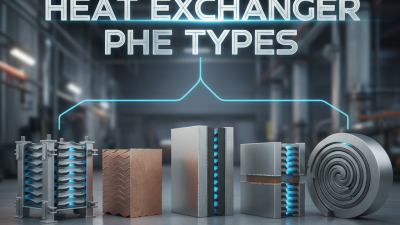
Plate heat exchangers have also gained traction due to their compact design and increased heat transfer rates. These units can achieve up to 90% efficiency in certain applications. However, their susceptibility to fouling poses a risk, requiring regular inspections. A significant study points out that the adoption of plate heat exchangers is projected to rise by 15% over the next few years, driven by the demand for energy-efficient solutions.
Furthermore, air-cooled heat exchangers are essential in scenarios where water usage is minimal. Their ability to operate in harsh environments is a notable advantage. Yet, they often have lower efficiency rates. The industry must reflect on the balance between efficiency and operational costs. Additionally, while some advancements have improved reliability, more research is needed to address the durability and performance of these systems under extreme conditions.
Key Factors for Selecting the Best Heat Exchanger for Your Needs
Selecting the right heat exchanger is crucial for industrial applications. Key factors to consider include efficiency, material compatibility, and maintenance requirements. Efficiency relates to how well the heat exchanger transfers heat. It directly impacts energy costs and overall productivity in a facility. Ensure the design suits your specific process conditions, as this will affect its performance significantly.
Material compatibility is another essential element. Different fluids and temperatures require specific materials to prevent corrosion or degradation. Evaluating the working environment helps in determining if a material can withstand these conditions. Regular maintenance is crucial too. Neglecting this can lead to efficiency losses and costly repairs.
It's also vital to assess space limitations and installation needs. Understanding your facility's layout can help in selecting a compact design when necessary. Consider ease of access for cleaning or servicing as well. Even small oversights in these areas can result in bigger issues down the line. By examining these factors carefully, buyers can make informed decisions that will lead to better operational outcomes.
Emerging Technologies in Heat Exchanger Design for 2026
Emerging technologies in heat exchanger design are transforming the industrial landscape as we approach 2026. Advanced materials such as carbon nanotubes and composite alloys show promise. These materials enhance thermal conductivity and reduce energy losses. According to a report by the International Energy Agency, using more efficient heat exchangers could lower global energy consumption by up to 5% by the end of the decade.
Innovative designs, like foldable or modular heat exchangers, allow for better space management. These technologies can adapt to specific industrial needs, making installations more efficient. Data indicates that modular designs can reduce maintenance costs by 30%. However, manufacturers face challenges with scalability and integration.
Some firms continue to use outdated systems, which limits their potential. It’s vital for industries to invest in modern solutions that boost energy efficiency. The challenge remains in balancing cost and innovation. A focused approach may reveal paths toward practical applications in various sectors. This shift is not just essential but urgent for sustainable industrial growth.
Global Market Trends and Leading Manufacturers in Heat Exchanger Industry
The heat exchanger industry is evolving rapidly. Market trends indicate a strong focus on energy efficiency and sustainability. Many manufacturers are investing in innovative designs. They aim to reduce environmental impact while maintaining high performance. This shift is evident in various sectors, from chemical processing to HVAC systems.
Leading manufacturers are adopting advanced materials and technologies. These include enhanced surface geometries and innovative sealing methods. Additionally, the integration of smart technologies is becoming a common theme. It allows for better monitoring and control of heat exchange processes. However, challenges remain. Some manufacturers struggle with the high initial costs associated with these innovations.
Another critical aspect is compliance with global standards. Companies must navigate the regulatory landscape effectively. It can be a daunting task for small and medium-sized enterprises. They often lack the resources to keep up with evolving regulations. This situation highlights the importance of adaptability and continuous improvement in the industry.
2026 Best Industrial Heat Exchanger Options for Global Buyers
| Type |
Material |
Efficiency (%) |
Operating Temperature (°C) |
Application |
| Shell and Tube |
Carbon Steel |
85 |
150 |
Petrochemical |
| Plate |
Stainless Steel |
90 |
180 |
Food Processing |
| Air-Cooled |
Aluminum |
75 |
100 |
HVAC |
| Double Pipe |
Copper |
80 |
120 |
Chemical Processing |
| Spiral |
Titanium |
88 |
200 |
Marine Applications |