China Best Plate Heat Exchanger Types for Efficient Thermal Management?
In the realm of thermal management, the choice of heat transfer equipment is critical. Among these, the Plate Heat Exchanger (PHE) stands out for its efficiency. This type of heat exchanger utilizes thin plates to optimize heat transfer between two fluids. Its compact design allows for versatile applications in various industries, from HVAC to food processing.
PHEs are recognized for their high surface area-to-volume ratio, enabling greater energy efficiency. This efficiency translates to reduced operational costs and smaller environmental footprints. Their design is not without challenges. Proper maintenance is essential to prevent fouling and ensure longevity. Understanding these aspects helps users capitalize on their benefits while navigating their limitations.
China offers a diverse range of Plate Heat Exchanger types, catering to various thermal management needs. From gasketed to welded models, the selection can be overwhelming. Users often face the dilemma of choosing the right type based on their specific requirements. Careful consideration is key to achieving optimal performance and efficiency.
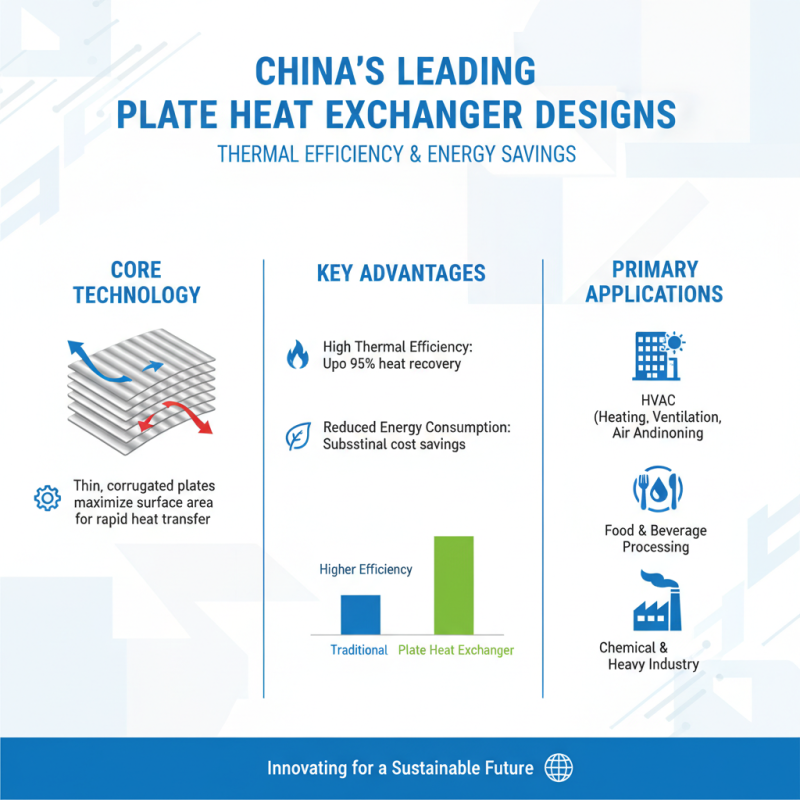
China's Leading Plate Heat Exchanger Designs for Thermal Efficiency
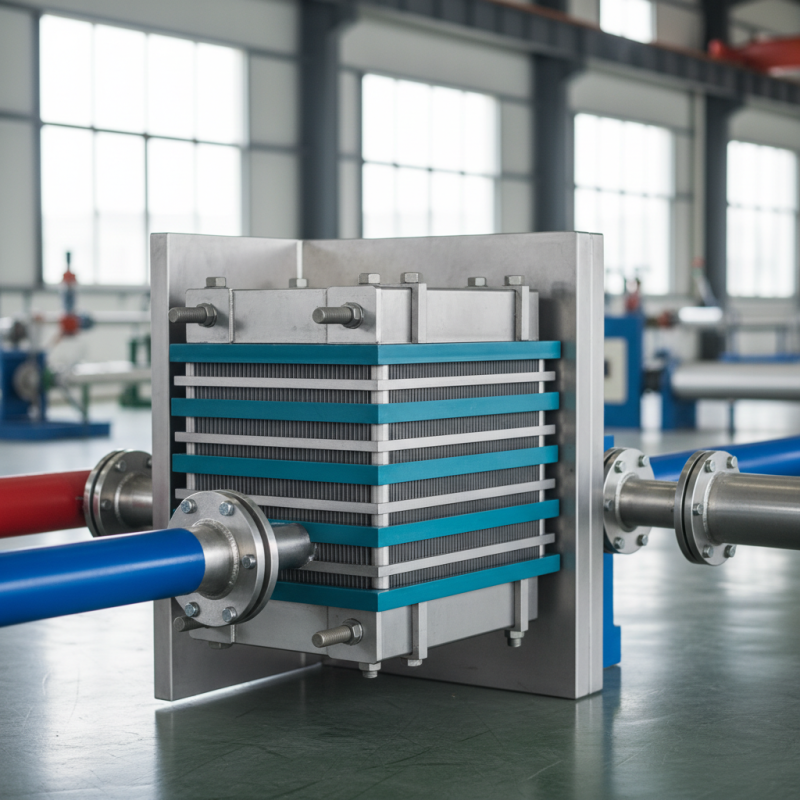
China's advanced plate heat exchanger designs play a crucial role in thermal efficiency. These units utilize thin plates stacked closely together, allowing for efficient heat transfer between fluids. The design maximizes surface area while minimizing fluid resistance, leading to substantial energy savings. Many industries, including HVAC and food processing, benefit from these systems.
The best types feature easy maintenance and high adaptability. Some designs allow for quick disassembly, which simplifies cleaning. However, not all models are reliable under extreme conditions. Users must evaluate their specific needs carefully. A balance between initial cost and long-term efficiency is essential. Selecting the wrong type can lead to performance issues and increased operational costs.
Innovation continues in this sector, focusing on more materials and unique configurations. Research shows that optimizing flow patterns can enhance overall performance. However, inconsistencies still exist in some products that may affect heat transfer rates. Understanding these nuances helps industries make informed choices. The right plate heat exchanger can significantly impact energy use and overall sustainability.
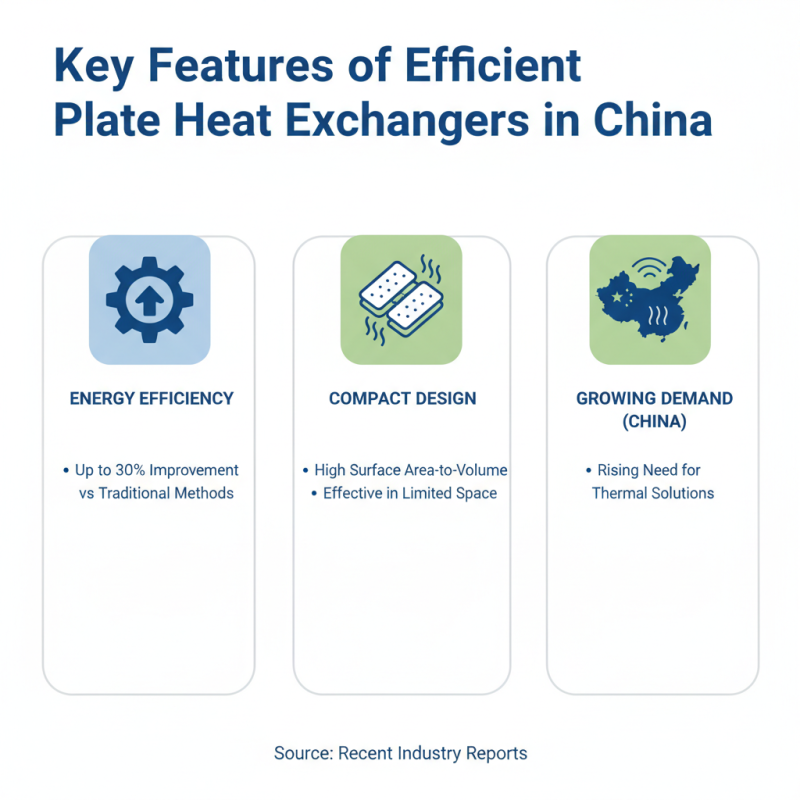
Key Features of Efficient Plate Heat Exchangers in China
In the realm of thermal management, plate heat exchangers (PHEs) stand out for their efficiency and compact design. In China, the demand for effective thermal solutions is on the rise. According to recent industry reports, plate heat exchangers can improve energy efficiency by up to 30% compared to traditional methods. This efficiency is largely attributed to their high surface area-to-volume ratio, enabling effective heat transfer even in limited spaces.
Key features of efficient plate heat exchangers include their modular design. They can be easily expanded or modified based on specific thermal requirements. This adaptability makes them suitable for various industrial applications, from food processing to chemical production. Reports indicate that PHEs have a lower maintenance cost due to fewer moving parts and simpler designs. However, attention must be given to the selection of materials to prevent corrosion, especially in industries handling aggressive fluids.
Heat transfer efficiency depends on several factors such as flow arrangement and plate geometry. Counterflow arrangements often yield the highest effectiveness, while corrugated plates can enhance turbulence, further improving heat transfer. Nevertheless, these systems may not be universally applicable; specific operational conditions and fluid types significantly influence performance. Thus, careful assessment is essential for optimal design and application in Chinese industries.
Comparison of Different Types of Plate Heat Exchangers in China
In the realm of thermal management, plate heat exchangers play a crucial role. These devices facilitate efficient heat transfer, essential for various industries. Different types exist, each offering unique advantages and potential drawbacks. Understanding these differences can lead to better energy savings and optimized processes.
China's advancement in heat exchanger technology has led to diverse options. The most common types include gasketed, brazed, and welded plate heat exchangers. Gasketed types are flexible and easy to maintain, but gaskets can wear out. Brazed heat exchangers provide durability but may restrict cleaning options. Welded types, while compact and strong, are difficult to service. Each option has specific applications, influencing overall effectiveness.
A challenge lies in choosing the right type based on unique system needs. Performance and longevity can vary significantly. Regular maintenance is vital for operational efficiency. Neglecting it can diminish heat transfer capabilities. Understanding these factors can help in making informed decisions, ensuring optimal thermal management in various settings.
Comparison of Different Types of Plate Heat Exchangers in China
Applications of Plate Heat Exchangers in Various Industries in China
Plate heat exchangers (PHEs) have become essential in various industries across China. They efficiently transfer heat while taking up less space compared to traditional exchangers. In the food processing sector, PHEs play a critical role. They help maintain product quality by controlling temperatures during pasteurization or cooling. This precision is vital for safety and taste, especially in dairy and beverage production.
The chemical industry also benefits significantly from these devices. PHEs are used in reactions where heat needs to be regulated closely. This application is crucial when managing exothermic reactions. The design allows for easy maintenance, yet challenges remain in preventing fouling. In energy production, plate heat exchangers are integral for heat recovery and improving efficiency. They facilitate better thermal management but require careful monitoring to ensure optimal performance.
These applications underline the versatility of plate heat exchangers. As industries strive for efficiency and sustainability, PHEs are increasingly favored. However, it is important to address the potential for corrosion and fouling, which can impact reliability. Evaluating these risks helps in making informed decisions about systems' long-term use.
Maintenance Practices for Enhanced Longevity of Plate Heat Exchangers
Plate heat exchangers are vital for efficient thermal management in various applications. To enhance their longevity, regular maintenance is crucial. This ensures they function effectively and prevents costly breakdowns. Proper cleaning is one aspect that should not be overlooked. Contaminants can accumulate over time, leading to reduced efficiency. Operators should develop a routine cleaning schedule tailored to their specific systems.
Tips: Monitor the fluid pressure regularly. Anomalies may indicate leaks or blockages. Consistent checks can help identify potential issues early.
Another essential practice is inspecting gaskets and seals. These components wear out and can cause leaks. Replacing them at scheduled intervals can prevent unexpected failures. Additionally, proper torque settings during assembly is vital. Incorrect tension can lead to mechanical issues.
Tips: Keep a record of maintenance activities. Documenting repairs and inspections helps track performance and can guide future maintenance. This will enhance reliability over time.
China Best Plate Heat Exchanger Types for Efficient Thermal Management
| Type |
Material |
Typical Application |
Efficiency Rating |
Maintenance Frequency (Months) |
| Gasketed |
Stainless Steel |
HVAC Systems |
High |
12 |
| Welded |
Nickel Alloy |
Chemical Processing |
Very High |
18 |
| Brazed |
Copper |
Food & Beverage |
Moderate |
24 |
| Semi-welded |
Carbon Steel |
Oil & Gas |
High |
12 |
| Microchannel |
Aluminum |
Automotive |
Very High |
6 |