Why Choose Brazed Heat Exchangers at the 139th Canton Fair?
The 139th Canton Fair presents a unique opportunity for businesses to explore innovative technologies. Among these, the Brazed Heat Exchanger stands out for its efficiency and reliability. In a time when energy conservation is paramount, these exchangers provide superior thermal performance. Visitors to the fair will appreciate their compact design and durability, making them ideal for various industries.
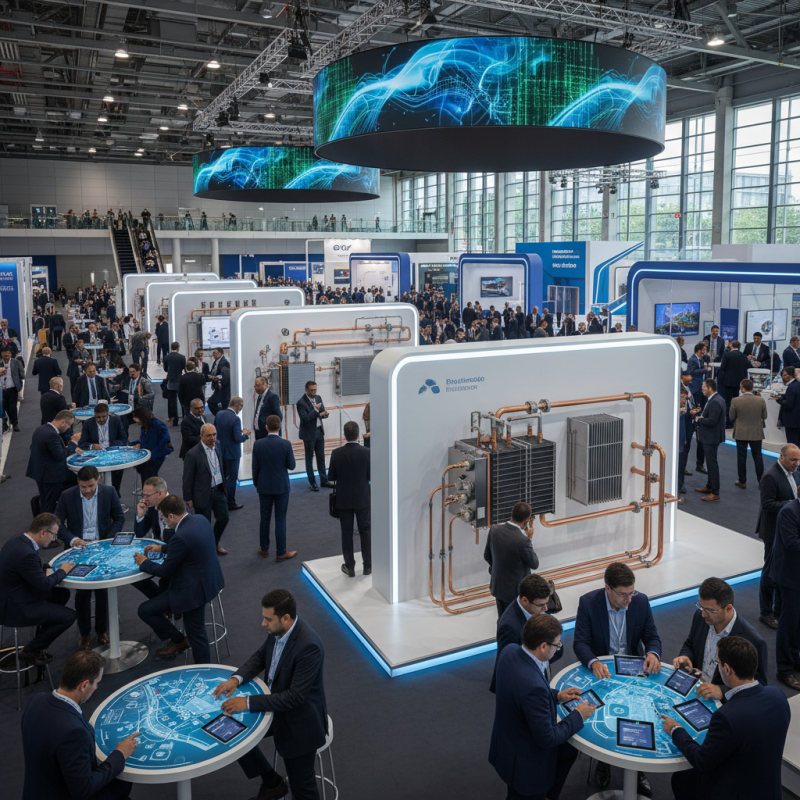
Attendees will benefit from the integration of AI smart search and navigation features at the fair. This technology allows buyers to find suppliers of Brazed Heat Exchangers that meet specific certifications like ISO and CE. However, the challenge remains: navigating such a large exhibition space efficiently is no easy task. With 1.55 million square meters to cover, it can be overwhelming.
As businesses explore new partnerships, the need for clear communication is essential. Potential buyers must evaluate various suppliers amidst the excitement of the fair. Brazed Heat Exchangers are a promising investment, but careful consideration is crucial. Engaging in meaningful discussions can help clarify doubts and lead to informed decisions. The journey at the Canton Fair is just beginning, and opportunities await those who seek them earnestly.
Understanding Brazed Heat Exchangers and Their Benefits
Brazed heat exchangers are revolutionizing efficiency in industrial applications. These devices use a unique brazing process to join metal parts. This results in a compact design, increasing their effectiveness. Reports show that brazed heat exchangers can improve heat transfer by nearly 30% compared to traditional welded units.
Their ability to operate under high pressure and temperature is another advantage. Many industries rely on these features for critical cooling and heating tasks. For instance, in refrigeration, the efficiency gained can translate into substantial energy savings. A study by the International Energy Agency indicated that better heat transfer could reduce energy consumption by 10-15%.
However, not all brazed heat exchangers are created equal. The manufacturing process can introduce variability, affecting performance. Buyers should carefully assess quality and material selection. Ensuring that the materials are suitable for specific applications is crucial. Overlooking these factors can lead to underperformance and increased costs. Each decision impacts reliability and sustainability.
Key Advantages of Choosing Brazed Heat Exchangers for Efficiency
Brazed heat exchangers are increasingly popular for their efficiency and performance. These devices use a unique joining method that eliminates additional sealing methods. According to industry reports, they can improve thermal performance by 20% compared to traditional heat exchangers. This heightened efficiency translates to lower operational costs and reduced energy consumption.
Moreover, brazed heat exchangers have a compact design. They save valuable space in industrial settings, making installation easier. In some cases, they can reduce the overall footprint by up to 50%. However, one must consider potential challenges. These units can be more expensive upfront than standard options. Organizations need to weigh long-term savings against initial costs carefully.
Their durability is another plus. Brazed heat exchangers typically have a longer lifespan. Industry data shows a 30% increase in service life compared to their welded counterparts. Yet, maintenance remains essential. Failing to monitor their condition can lead to problems down the line. So, investing in regular upkeep is crucial for maximizing efficiency and longevity.
Applications of Brazed Heat Exchangers in Various Industries
Brazed heat exchangers find extensive applications across diverse industries. Their design enables efficient heat transfer, making them crucial in HVAC systems, refrigeration, and process industries. Reports indicate that the global heat exchanger market is projected to reach $18 billion by 2025, fueled by rising energy demands. In HVAC, these exchangers improve energy efficiency by 30% compared to traditional models.
In the food and beverage sector, brazed heat exchangers ensure safe and efficient production processes. They resist corrosion and can handle high pressure, suitable for pasteurization. According to industry studies, the food processing industry is expected to grow by 5.2% annually, highlighting the need for efficient heat transfer solutions.
Tips: Always evaluate the specific requirements of your application before selecting a heat exchanger. Not all designs may fit your needs perfectly. Ensure they meet safety standards to avoid potential hazards. Additionally, consider future scalability and maintenance costs when making decisions.
As industries evolve, brazed heat exchangers must adapt. Their performance can be affected by operational conditions. Regular assessments and updates can enhance efficiency. Each industry may encounter unique challenges that require innovative solutions. Continuous learning is vital for leveraging the full potential of these technologies.
Applications of Brazed Heat Exchangers in Various Industries
Insights from the 139th Canton Fair on Brazed Heat Exchangers
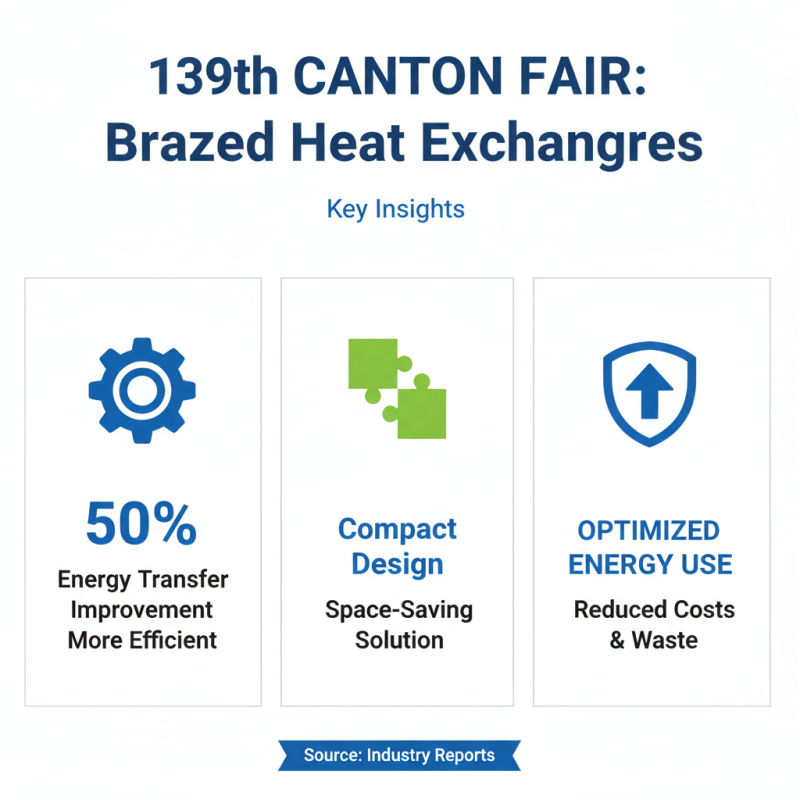
At the 139th Canton Fair, brazed heat exchangers stood out due to their efficiency and compact design. Industry reports reveal that these systems can improve energy transfer rates by up to 50%. This performance enhancement is crucial in today's energy-driven markets. With increasing energy costs, manufacturers are seeking solutions that optimize power use and reduce waste.
The fair showcased innovations in brazed heat exchanger technology. Participants noted a shift towards eco-friendly materials. Many units now feature stainless steel that resists corrosion, ensuring longevity. Moreover, the compact size of these exchangers saves valuable installation space.
However, the industry faces challenges. Some delegates expressed concerns over compatibility with existing systems. A significant number of older installations may require upgrades to integrate new designs. Moreover, while the immediate benefits are clear, manufacturers must consider the long-term environmental impact of production methods. Achieving a balance between performance and sustainability remains a critical discussion point among experts.
Future Trends and Innovations in Brazed Heat Exchanger Technology
Brazed heat exchangers are becoming essential in various industries due to their efficiency. New innovations focus on leveraging advanced materials. According to research by Research and Markets, the global heat exchanger market is projected to grow significantly by 2026, with a compound annual growth rate of over 8%. This growth reflects the rising demand for energy-efficient technologies.
Recent developments include enhanced brazing techniques, which improve durability and reduce manufacturing waste. For instance, vacuum brazing minimizes oxidation and promotes better thermal conductivity. These improvements result in more compact designs and lighter products. Some challenges remain, though, such as the initial cost of manufacturing. Stakeholders must evaluate whether the long-term benefits justify these costs.
The future may see further integration of smart technologies. By incorporating sensors, heat exchangers could monitor performance in real-time. This transformation promises to optimize energy use effectively. However, real-world application is still evolving, and several factors need consideration, including compatibility with existing systems. Industry players must be vigilant in addressing these issues to realize the full potential of brazed heat exchangers.