Why Choose Plate Exchanger for Efficient Heat Transfer Solutions?
In recent years, the demand for energy-efficient heat transfer solutions has surged, pushing industries to seek innovative technologies. The Plate Exchanger has emerged as a frontrunner in this landscape. According to a report by MarketsandMarkets, the global plate heat exchanger market is projected to reach USD 4.1 billion by 2025. This growth reflects a shift towards more efficient heating and cooling solutions across sectors such as food processing, pharmaceuticals, and HVAC.
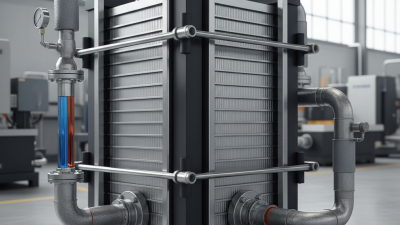
Plate Exchangers offer a compact design, maximizing surface area while minimizing fluid volume. Their ability to adapt to varying flow rates enhances efficiency. However, it is crucial to note that not all applications may benefit from this technology. For instance, applications involving highly viscous fluids can face challenges. Experts suggest conducting thorough assessments to determine suitability for specific operational needs.
While undeniably advantageous, Plate Exchangers require careful maintenance. A lack of proper care can lead to fouling, diminishing performance. Industry studies indicate that poorly maintained systems can lose up to 20% of their efficiency. Therefore, understanding the operational context and maintaining high performance is essential for harnessing the full potential of Plate Exchangers in heat transfer applications.
Benefits of Plate Exchangers in Heat Transfer Applications
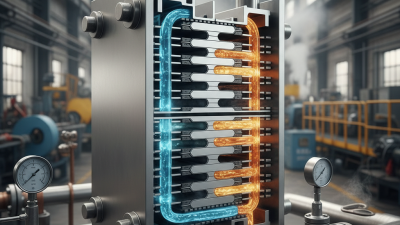
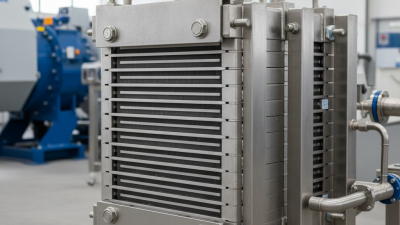
Plate heat exchangers are increasingly favored for their superior efficiency in heat transfer applications. They utilize a series of thin plates stacked together, allowing for significant surface area in a compact design. Data from the International Energy Agency highlights that plate exchangers can achieve up to 90% heat transfer efficiency. This level of efficiency not only reduces energy consumption but also leads to substantial cost savings in industrial applications.
Additionally, plate exchangers are versatile. They can handle a variety of fluids and operate at different temperatures and pressures. According to recent studies, industries utilizing plate exchangers report a 30% reduction in energy costs compared to traditional shell-and-tube designs. However, maintenance can be challenging, as fouling issues may arise over time. Regular cleaning protocols are essential to maintain performance.
The compact size of plate exchangers enhances installation flexibility. They can fit into limited spaces, making them suitable for retrofitting in existing systems. Still, it’s crucial to assess the specific needs of a system. Not every application may benefit from plate exchangers. Understanding flow rates, temperatures, and fluid properties is vital for optimal performance. These considerations are essential for ensuring reliability and long-term success in heat transfer applications.
Comparative Analysis: Plate Exchanger vs. Traditional Heat Exchangers
When comparing plate exchangers to traditional heat exchangers, several key differences emerge. Plate exchangers utilize flat plates to conduct heat transfer efficiently. Their compact design allows for a smaller footprint, which is beneficial in limited spaces. Heat transfer rates can be higher in plate exchangers due to the increased surface area. This leads to enhanced thermal efficiency, especially in applications requiring rapid heat exchange.
Contrarily, traditional heat exchangers often face limitations regarding size and performance. They typically have a more extensive surface area requirement, leading to bulkier installations. Maintenance can also be a challenge with traditional models, as they often require more frequent cleaning. Plate exchangers simplify maintenance with easy access to the plates and fewer structural components.
However, not all scenarios suit plate exchangers. In high-pressure applications, traditional models might offer better performance. Their robust design handles extreme conditions well. Each type has its merits, and determining the best choice involves assessing specific needs. This assessment might reveal unexpected complexities, making the decision quite nuanced. Choosing a heat exchanger thus demands careful consideration.
Design Features That Enhance Efficiency in Plate Exchangers
Plate heat exchangers (PHEs) have become a preferred choice for efficient heat transfer solutions in various industrial applications. Their design features significantly enhance thermal efficiency. With a compact structure and larger surface area, PHEs can achieve a heat transfer coefficient that is often 3 to 5 times higher than traditional heat exchangers. This is critical in minimizing energy consumption, as a study by the International Energy Agency indicates that efficient heat recovery can reduce energy costs by up to 30% in some sectors.
The flexibility in design allows plate exchangers to be tailored for specific applications. This customization can achieve optimal flow arrangements and improved turbulent flow conditions. Research highlights that introducing turbulence increases the heat transfer rate. Moreover, the use of advanced materials in fabrication provides greater corrosion resistance and durability. In fact, reports indicate that PHEs made with high-quality stainless steel can last over 20 years, even in harsh conditions.
However, it is essential to consider potential maintenance challenges. While PHEs allow for easy cleaning, sediment buildup can still occur. Regular inspections are necessary to maintain efficiency. Companies must be aware that neglecting this aspect could lead to reduced performance over time. This need for routine maintenance can deter some businesses from fully embracing PHE technology.
Why Choose Plate Exchanger for Efficient Heat Transfer Solutions? - Design Features That Enhance Efficiency in Plate Exchangers
| Feature |
Description |
Efficiency Gain (%) |
Application Areas |
| Compact Design |
Space-saving design allowing for high heat transfer efficiency in limited spaces. |
30% |
Food Processing, HVAC |
| Easy Maintenance |
Removable plates for quick cleaning and maintenance, minimizing downtime. |
20% |
Chemical Processing, Power Generation |
| High Heat Transfer Efficiency |
Innovative plate design enhances turbulence, maximizing heat transfer. |
40% |
Pharmaceuticals, Oil & Gas |
| Versatility |
Adaptable to various fluids and temperatures, accommodating diverse applications. |
25% |
Beverage Production, HVAC |
| Durability |
Constructed with robust materials, ensuring long lifespan and reliability under high pressures. |
15% |
Industrial Applications, Heat Recovery |
Common Industries Utilizing Plate Heat Exchangers for Optimal Performance
Plate heat exchangers are widely used in various industries due to their efficient heat transfer capabilities. These units excel in industries like food and beverage, chemical processing, and HVAC. Their compact design allows for high heat transfer efficiency in a relatively small footprint, making them ideal for limited spaces. In the food industry, plate heat exchangers are essential for pasteurization and cooking processes, ensuring product safety and quality.
Chemical processing also benefits from plate heat exchangers. Here, temperature control is crucial. Their ability to handle a variety of fluids, including corrosive ones, makes them reliable. However, maintenance can be challenging. Regular inspection is necessary to prevent fouling and ensure optimal performance. HVAC systems utilize plate exchangers for cooling and heating, enhancing energy efficiency. Yet, engineers often must strike a balance between energy savings and system complexity.
Despite the advantages, plate heat exchangers are not without their flaws. They require careful design to avoid pressure drops. Users must consider both thermal and hydraulic performance to avoid inefficiencies. Finding the right materials and configurations can be a trial-and-error process. Reflecting on these aspects can lead to better integration in various applications.
Common Industries Utilizing Plate Heat Exchangers for Optimal Performance
Maintenance Practices to Ensure Longevity of Plate Heat Exchangers
Maintaining plate heat exchangers is vital for ensuring their longevity and performance. Regular inspections can help identify potential issues early. Look for signs of corrosion or leaks that could compromise efficiency. Check the gaskets and plates regularly. Any wear and tear can lead to inefficient heat transfer. Proper functioning hinges on promptly addressing these concerns.
Cleaning plate heat exchangers should be part of the maintenance routine. Deposits can accumulate over time, reducing operational efficiency. Utilize appropriate cleaning methods based on the medium processed. Chemical cleaning can be effective, but it requires careful handling. Always follow safety protocols.
Training staff on maintenance practices is essential for long-term care. Employees must understand the importance of these tasks. Regular training sessions can help reinforce best practices. Mistakes happen, and it is important to learn from them. Keep a detailed log of all maintenance activities to track the exchanger's performance history. This not only ensures reliability but also aids in identifying patterns of wear and tear.