Leave Your Message

China Top 10 Mueller Heat Exchanger Manufacturers?

China’s heat-exchanger industry is expanding with industrial cooling, food processing, HVAC, and energy projects. This growth makes supplier selection more difficult, especially when comparing domestic manufacturers with global brands such as Mueller Heat Exchanger.

The International Energy Agency’s Energy Efficiency 2023 report identifies industry as responsible for roughly 37% of global final energy consumption. Efficient heat transfer therefore affects operating costs, emissions, and production reliability. The U.S. Department of Energy also emphasizes correct sizing, fouling control, maintenance access, and system integration in industrial heat-exchanger applications. These details matter more than a polished product brochure.

This guide introduces ten notable China-based manufacturers connected with shell-and-tube, plate, air-cooled, and customized heat-exchanger solutions. The evaluation considers manufacturing experience, material traceability, pressure testing, thermal design, certifications, export capability, and after-sales support. ASHRAE guidance on heat-transfer equipment and maintenance provides an additional technical reference.

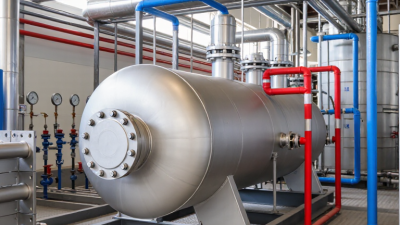
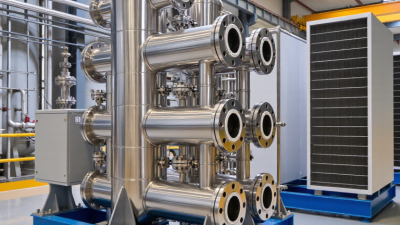
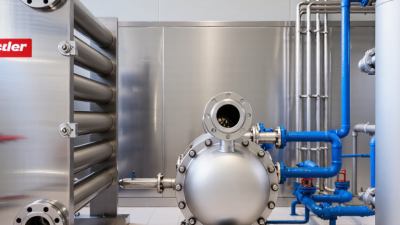
Real equipment tells a clearer story.

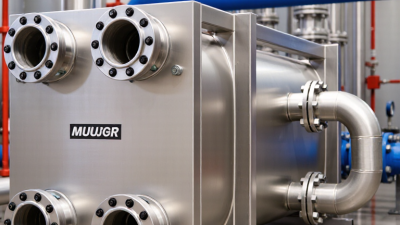
A stainless-steel plate pack should show consistent gasket seating. Welds should look uniform, not hurried. Test records should identify pressure, temperature, date, and responsible personnel. These small details often separate reliable production from attractive marketing.

The list is not an official industry ranking. Public data varies between companies, and some manufacturers disclose limited capacity information. That weakness should be acknowledged. A supplier with fewer published figures may still perform well, while a larger company may not fit every application. Buyers should verify drawings, certificates, references, and service terms before signing a purchase contract.
China Top 10 Mueller Heat Exchanger Manufacturers?

What Is a Mueller Heat Exchanger and How Does It Work?

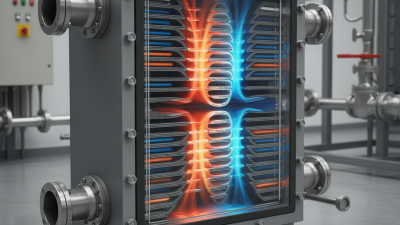
A Mueller heat exchanger is a device that transfers heat between two fluids without allowing them to mix. In many installations, it uses thin metal plates arranged in a compact frame. Hot liquid flows through one channel, while cooler liquid moves through the next. The plates conduct heat across their surfaces. Counterflow movement usually improves efficiency.

The working principle is simple, but real performance depends on details. A dairy operator may send warm product through one side and chilled water through the other. Gaskets keep the streams separated, while ports guide each fluid through the correct channels. I have seen small fouling layers reduce heat transfer noticeably. Milk solids, minerals, and poor cleaning practices can create this problem.

Maintenance requires practical judgment. Operators should check pressure loss, outlet temperatures, gasket condition, and signs of leakage. Cleaning-in-place systems can remove deposits, but chemical concentration and temperature must match the equipment design. Excessive flow may improve heat transfer while increasing pumping costs. Low flow saves energy, yet it can encourage fouling. That trade-off is easy to overlook. The exact plate pattern, material, and pressure rating must come from the technical drawing. A general explanation cannot replace model-specific inspection.
China Top 10 Mueller Heat Exchanger Manufacturers? - What Is a Mueller Heat Exchanger and How Does It Work?
No. Technical Dimension Typical Heat Exchanger Information How It Works or Why It Matters Common Selection Consideration
1 Basic Definition A heat exchanger transfers thermal energy between two or more fluids without normally mixing them. Heat moves through a separating wall from the hotter fluid to the colder fluid. Select the design according to heat duty, fluid compatibility, pressure, temperature, and available space.
2 Heat Transfer Direction Counter-current flow is widely used in high-efficiency heat exchanger designs. The hot and cold fluids travel in opposite directions, maintaining a stronger temperature difference over much of the exchanger. Counter-current arrangements generally provide better thermal performance than parallel-flow arrangements for comparable conditions.
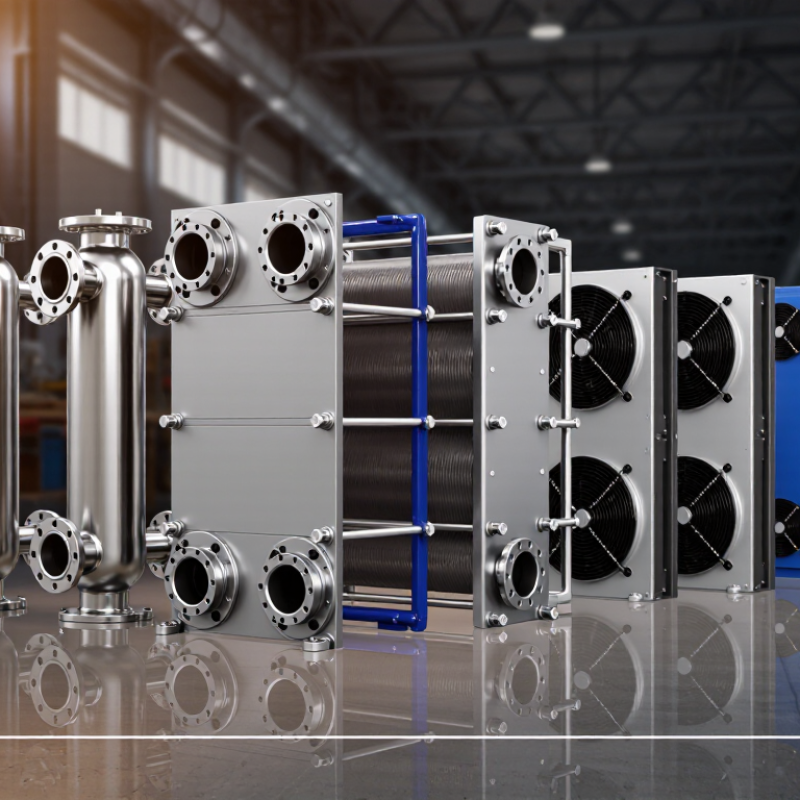
3 Common Construction Types Common formats include plate-and-frame, brazed-plate, shell-and-tube, double-wall, and air-cooled heat exchangers. Each construction uses a different flow path and heat-transfer surface to suit specific operating conditions. Plate units are compact; shell-and-tube units are versatile; air-cooled units avoid the need for cooling water.
4 Heat-Transfer Surface The heat-transfer surface may consist of corrugated plates, tubes, fins, or a double-wall barrier. Corrugations and fins increase surface area and promote turbulence, improving heat transfer. Surface geometry should balance thermal efficiency, cleanability, pressure drop, and fouling risk.
5 Typical Materials Frequently used materials include stainless steel, carbon steel, titanium, nickel alloys, copper alloys, and aluminum. Material selection affects corrosion resistance, thermal conductivity, mechanical strength, and service life. Check chloride content, acidity, oxygen exposure, fluid velocity, temperature, and galvanic compatibility.
6 Temperature Range Operating temperature is determined by the exchanger construction, materials, seals, pressure rating, and fluid properties. The exchanger must withstand the highest operating temperature as well as startup, shutdown, and transient conditions. Gasketed designs require special attention to seal temperature limits; welded designs may tolerate more severe conditions.
7 Pressure and Pressure Drop The design pressure must exceed the maximum allowable working pressure for each fluid circuit. Flow resistance creates pressure drop as fluid passes through channels, tubes, bends, and ports. A higher pressure drop can improve heat transfer but may increase pumping or fan power requirements.
8 Fouling and Maintenance Scale, sediment, biological growth, oil, and process deposits can reduce heat-transfer performance. Deposits add thermal resistance and may restrict the flow passage, lowering capacity and increasing pressure drop. Choose removable plates, larger passages, filtration, water treatment, or an appropriate cleaning method when fouling is expected.
9 Leak Prevention Gaskets, welded joints, brazed joints, tube sheets, and double-wall barriers are used to separate fluid circuits. The separating wall prevents cross-contamination while allowing thermal energy to pass through it. For fluids that must not mix, consider double-wall construction, leak detection, or a secondary containment system.
10 Typical Applications Applications include HVAC, refrigeration, process heating and cooling, domestic hot water, food processing, power generation, and renewable-energy systems. The exchanger recovers, adds, removes, or transfers heat between water, glycol, refrigerant, oil, steam, air, or process fluids. The final specification should be based on heat load, flow rates, inlet and outlet temperatures, fluid chemistry, hygiene requirements, and applicable codes.

Key Criteria for Ranking China’s Mueller Heat Exchanger Manufacturers

China Top 10 Mueller Heat Exchanger Manufacturers?

Ranking China’s top ten Mueller heat exchanger manufacturers requires more than checking factory size. Grand View Research estimated the global heat exchanger market at about USD 17.7 billion in 2023. That growth increases supplier competition, but it also complicates quality judgment. A credible ranking should measure pressure-test records, material traceability, thermal performance, delivery reliability, and after-sales support.

Technical compliance deserves heavy weighting. Manufacturers should demonstrate design control against TEMA practices, relevant ISO requirements, and project-specific pressure standards. The U.S. Department of Energy identifies industrial heat recovery as a major efficiency opportunity, so verified thermal data matters. Request heat-transfer coefficients, fouling assumptions, pressure-drop calculations, and test certificates. Do not accept attractive numbers without operating conditions.

Experience appears in small details. Ask for weld maps, inspection photographs, gasket specifications, and records from similar fluids. Score production capacity separately from actual delivery history. IEA reports that industry remains one of the largest global energy users, making efficiency claims commercially important. Yet supplier websites often present incomplete evidence. That is a weakness worth recording. An independent audit, sample inspection, and customer reference should influence the final ranking more than online visibility. A low-cost quotation may still hide higher lifecycle expenses.

China’s Top 10 Mueller Heat Exchanger Manufacturers

China’s top ten heat exchanger manufacturers should be judged by evidence, not advertising claims. In real projects, buyers should inspect factory capacity, welding records, material certificates, and pressure-test reports. Strong suppliers usually provide shell-and-tube, plate, or custom units for food processing, chemicals, HVAC, and energy systems. Their engineering teams should understand thermal duty, fouling, corrosion, flow velocity, and maintenance access.

A reliable shortlist needs more than production volume. Check whether the manufacturer can complete thermal calculations and mechanical drawings before fabrication. Ask for references from similar operating conditions.

Site audits may reveal useful details, such as clean welding bays, calibrated testing instruments, and traceable stainless-steel storage. I would not rank a supplier from photos alone. Some impressive factories still communicate poorly after receiving a deposit.

Tips: Request a sample inspection plan before signing. Confirm gasket materials, design pressure, test standards, delivery stages, and spare-part support. Compare the quoted heat-transfer area with your actual operating data. A cheaper unit may carry hidden cleaning costs. Leave room for revision, because early process information is often incomplete. That part is easy to underestimate.

Product Types, Industries Served, and Manufacturing Capabilities

China Top 10 Heat Exchanger Manufacturers: Product Types, Industries Served, and Manufacturing Capabilities

China’s leading heat exchanger manufacturers cover shell-and-tube, plate, air-cooled, welded, and brazed designs. These products support food processing, chemical production, power generation, HVAC, marine systems, and renewable energy projects. MarketsandMarkets estimates the global heat exchanger market could grow from about USD 17.6 billion in 2023 to USD 26.0 billion by 2028. This growth increases demand for compact designs and reliable thermal control.

Manufacturing capability separates strong suppliers from simple fabricators. Qualified factories typically use CNC machining, automated tube expansion, robotic welding, pressure testing, and digital inspection records. Stainless steel, titanium, nickel alloys, and duplex steel are common choices for corrosive fluids. Some facilities report annual production above several thousand units, although capacity figures require careful verification. Numbers can be optimistic.

Grand View Research identifies energy efficiency, industrial expansion, and stricter emission targets as major market drivers. In practice, buyers should examine thermal design software, material traceability, surface finishing, and testing standards. Industries often need customized flow paths, removable bundles, sanitary polishing, or high-pressure construction. A strong manufacturer can provide drawings, performance calculations, inspection plans, and after-sales support. Certification alone is not enough. Real operating references matter.

How to Select the Right Chinese Mueller Heat Exchanger Supplier

Choosing a Chinese heat exchanger supplier requires more than comparing catalog prices. The International Energy Agency reported that industry consumed about 37% of global final energy in 2022. Small thermal losses can therefore become expensive over long operating cycles.

Ask for verified thermal calculations, not estimated capacity. Require inlet and outlet temperatures, flow rates, pressure drop, fouling factors, and material grades. For plate-and-frame units, inspect gasket compatibility and plate thickness. For tubular designs, check tube expansion, weld procedures, and cleanability. AHRI Standard 400 offers a useful framework for liquid-to-liquid performance testing. I would also request test records from an independent laboratory. A polished factory video proves little.

A serious supplier should provide ISO 9001 records, material certificates, hydrostatic test results, and a traceable inspection plan. Compare the quoted duty against the 2024 Fortune Business Insights market report, which valued the global heat exchanger market at about USD 18.9 billion in 2023. Market growth does not guarantee quality. It can even encourage rushed production. Ask how the supplier manages design changes, spare parts, and warranty claims after installation. Sample the communication: unclear answers before payment may become slower answers during commissioning. A low quote can still be the wrong quote. Supplier audits matter. So does your own specification.