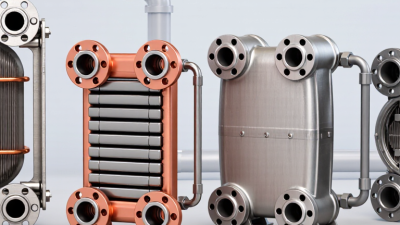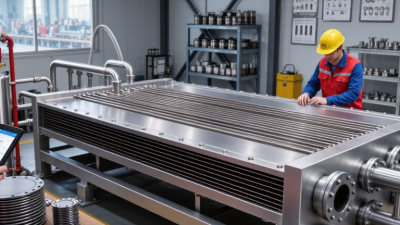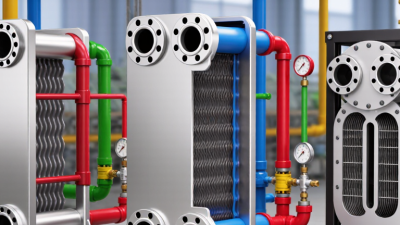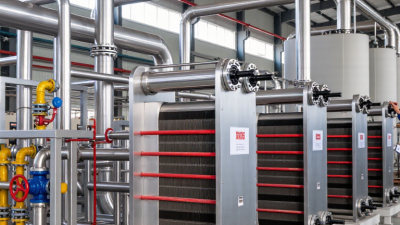
Choosing the right China Best Plate To Plate Heat Exchanger Manufacturer requires more than comparing prices. Buyers need dependable thermal performance, accurate specifications, and evidence from real industrial applications. A trusted supplier should explain plate materials, gasket options, pressure ratings, flow channels, and heat transfer efficiency clearly. Factory experience matters.
A reliable Plate To Plate Heat Exchanger manufacturer should also provide practical engineering support. This includes system sizing, temperature analysis, pressure-drop calculations, and installation guidance. During production, quality teams should inspect plate thickness, welding points, gasket fitting, and hydrostatic test results. Small details can prevent serious maintenance problems later.
Look for certifications, documented testing, export experience, and responsive communication. Ask for drawings, performance data, reference projects, and clear warranty terms. A factory visit or live production video can reveal more than polished brochures. Stainless steel plates should appear clean and evenly pressed. Connections should align without forced adjustment.
No supplier is perfect. Some companies may have strong production capacity but limited overseas service. Others may offer excellent engineering support but longer delivery times. This trade-off deserves honest evaluation. In my experience, the best choice depends on application conditions, not brand claims alone. Food processing, HVAC, chemical processing, and marine systems require different designs.
This guide examines China’s leading manufacturers through product quality, technical expertise, customization, compliance, service, and customer reliability. The goal is practical guidance. Not empty rankings. Readers can use these standards to compare suppliers confidently and select equipment that performs consistently under real operating conditions.
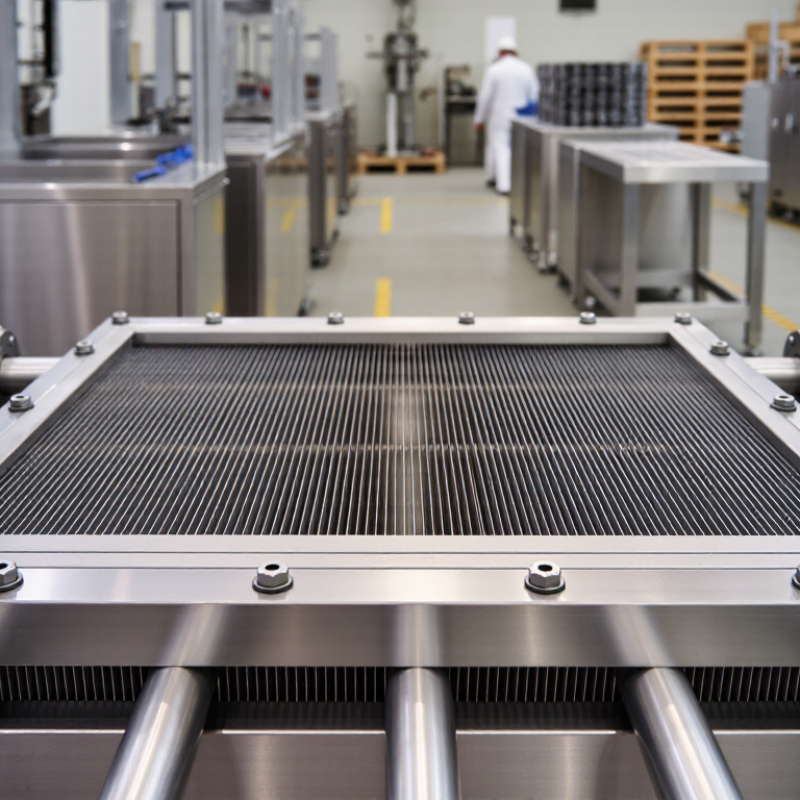
China Best Plate To Plate Heat Exchanger Manufacturer?
Plate-to-plate heat exchangers transfer heat through thin metal plates without mixing the fluids. In counterflow operation, thermal efficiency can reach 90–95% under balanced flow conditions. The U.S. Department of Energy’s Industrial Decarbonization Roadmap highlights heat recovery as an important method for reducing industrial energy demand. Efficiency matters.
This percentage describes heat transfer effectiveness, not total energy savings. ASHRAE Handbook guidance shows that performance depends on temperature differences, flow rates, fouling, and pressure drop. A unit may achieve 95% in laboratory testing, yet deliver less in a dusty factory or poorly balanced HVAC system. Real conditions are less tidy.
For example, 100°C exhaust air passing beside 20°C incoming air could raise the incoming stream close to 96°C under ideal assumptions. Moisture, leakage, scaling, and irregular airflow reduce that result. The International Energy Agency’s Energy Efficiency 2023 report also identifies efficiency improvements as essential for lowering industrial energy use. Buyers should request certified test data, material specifications, gasket limits, and pressure-drop curves. Do not judge by efficiency alone. Maintenance access matters. So does corrosion resistance. A cheaper exchanger can become expensive when deposits block narrow channels.
Choosing a reliable plate-to-plate heat exchanger manufacturer requires more than comparing catalog prices. For many industrial systems, a practical target is a 1–3°C approach temperature. This narrow difference can reduce energy waste, but it demands accurate design data. Confirm flow rates, inlet temperatures, pressure limits, and fluid composition. Numbers need context. A unit rated for 0.5 m² may suit a compact skid, while 1,000 m² may serve district energy or process plants.
Required area depends on heat duty, transfer coefficients, fouling allowance, and allowable pressure drop. Do not accept area alone as proof of capacity. A narrow approach is not automatically better. In practice, a design can look efficient on paper and still foul quickly.
Process water containing suspended solids may need wider channels, filtration, or easier cleaning access. A small fouling assumption can change the required area significantly.
Material selection also affects service life. Check plate metallurgy, gasket compatibility, operating temperature, and corrosion risks. Request thermal calculations, pressure-drop data, hydrostatic test records, and documented quality procedures. The manufacturer should explain how the 1–3°C approach was achieved under real flow conditions. Ask whether the stated 0.5–1,000 m² range reflects tested configurations or only theoretical sizing. Clear answers matter. An honest supplier should identify design limits, maintenance needs, and uncertainties before production.
Choosing a plate heat exchanger manufacturer in China requires more than comparing price and delivery time. ISO 9001 certification indicates a controlled quality system, but it does not prove thermal performance. Ask for the certificate scope, audit date, process controls, and corrective-action records. Experienced manufacturers should also provide material certificates, plate thickness data, gasket specifications, and calibrated test results.
ASME compliance must match the actual product and pressure boundary. Confirm whether the manufacturer holds the relevant authorization and can supply design calculations, welding procedure records, and inspection reports. CE marking requires conformity with applicable European requirements, while EN 13445 covers design and manufacture of unfired pressure vessels. These standards may not apply identically to every plate heat exchanger. A careful supplier explains the limits instead of promising universal compliance. That matters.
Tips: Request a document sample before signing. Check serial numbers against test records. Review pressure-test conditions, not only final certificates. Ask whether notified-body involvement is required for your application. Factory visits can reveal useful details, such as clean assembly areas, labeled materials, and traceable inspection points. Still, a visit is only a snapshot. I would also compare drawings with the delivered unit, because small nozzle or gasket changes can affect installation. Some evaluations miss this practical step.
This chart maps the primary evaluation areas covered by the referenced quality and pressure-equipment frameworks. A value of 1 means the framework directly addresses the evaluation area; 0 means it is not its primary scope. ISO 9001 focuses on quality management systems, ASME Section VIII covers pressure-vessel construction, CE marking under the Pressure Equipment Directive confirms applicable EU conformity requirements, and EN 13445 provides requirements for unfired pressure vessels. The chart is a compliance-scope guide, not a ranking of manufacturers.
Reference frameworks: ISO 9001:2015, ASME Boiler and Pressure Vessel Code Section VIII, Directive 2014/68/EU, and EN 13445.
China Best Plate To Plate Heat Exchanger Manufacturer?
Performance Comparison: 1.0–2.5 MPa Pressure Ratings and 0.5–10 mm Plates
Choosing a plate heat exchanger starts with pressure, not appearance. Units rated at 1.0 MPa suit many heating and cooling loops. Systems near 2.5 MPa need stronger frames, tighter testing, and carefully selected plate materials. Design pressure is not the same as operating pressure. A safety margin matters.
Plate thickness usually ranges from 0.5 to 10 mm. Thin plates transfer heat efficiently and reduce material use. However, they can deform under pressure or rough maintenance. Thicker plates resist mechanical stress, but they may reduce heat transfer flexibility and increase weight. A thicker plate is not automatically safer.
In commissioning work, I check pressure, temperature, fluid chemistry, flow rate, and cleaning access together. Gaskets, welds, ports, and frame bolts can limit performance before the plate does. For a 2.5 MPa application, ask for hydrostatic test records and material certificates. Confirm whether the rating applies at the required temperature. This detail is often missed.
The best specification depends on the actual duty. Water circuits may accept 0.5–1.5 mm plates when fouling is controlled. Slurry, high-viscosity fluids, or frequent cleaning may require thicker construction. Do not select from a catalog number alone. My early designs sometimes focused too heavily on pressure rating. Real operating data later changed the plate pattern and thickness. That lesson remains useful.
| Plate Thickness | Common Plate Material | Indicative Design Pressure | Metal-Wall Thermal Resistance (304/316 Stainless Steel) |
Typical Construction | Typical Applications | Performance Considerations |
|---|---|---|---|---|---|---|
| 0.5 mm | 304L or 316L stainless steel | Up to approximately 1.0 MPa, subject to plate pattern and frame design | 3.3 × 10⁻⁵ m²·K/W | Thin corrugated gasketed plate | Low-pressure water heating, cooling, and HVAC duties | Low metal resistance and low material use; requires careful vibration, fatigue, and pressure-drop control. |
| 0.6 mm | 304L or 316L stainless steel | Approximately 1.0–1.6 MPa, depending on design | 4.0 × 10⁻⁵ m²·K/W | Corrugated gasketed plate | Process water, glycol circuits, and general utility services | Good balance between heat-transfer efficiency, weight, and mechanical strength. |
| 0.8 mm | 304L, 316L, or titanium | Approximately 1.6 MPa | 5.3 × 10⁻⁵ m²·K/W | Heavy-duty gasketed plate | District energy, industrial cooling, and seawater service with titanium | Improved rigidity and service life; titanium is selected for chloride-rich or seawater environments. |
| 1.0 mm | 316L stainless steel or titanium | Approximately 1.6–2.0 MPa | 6.7 × 10⁻⁵ m²·K/W | High-strength gasketed or welded plate | Oil cooling, chemical processing, and higher-pressure water systems | Higher pressure capability with a modest increase in wall resistance and weight. |
| 1.2 mm | 316L stainless steel, nickel alloy, or titanium | Approximately 2.0 MPa | 8.0 × 10⁻⁵ m²·K/W | Reinforced gasketed or welded plate | Industrial process heat recovery and pressurized thermal-oil systems | Suitable where mechanical margin and corrosion resistance are more important than minimum weight. |
| 1.5 mm | 316L stainless steel or nickel alloy | Approximately 2.0–2.5 MPa, subject to certification | 1.0 × 10⁻⁴ m²·K/W | High-pressure welded or reinforced plate | High-pressure process duties and compact industrial heat recovery | Higher fatigue and pressure resistance; channel geometry and weld quality are critical. |
| 2.0 mm | 316L stainless steel, duplex stainless steel, or nickel alloy | Approximately 2.0–2.5 MPa in welded designs | 1.3 × 10⁻⁴ m²·K/W | Welded plate-and-shell or robust plate module | High-temperature fluids, hydrocarbons, and demanding process service | Greater structural strength, but usually less compact and more expensive than thin gasketed plates. |
| 3.0 mm | Carbon steel, stainless steel, or nickel alloy | Approximately 2.0–2.5 MPa in structural or welded components | 2.0 × 10⁻⁴ m²·K/W | Channel, shell, cover, or structural plate | Large industrial exchangers and mechanically demanding assemblies | Normally not used as a conventional corrugated heat-transfer plate because added wall resistance reduces compactness. |
| 5.0 mm | Carbon steel, stainless steel, or nickel alloy | Approximately 1.0–2.5 MPa, depending on vessel design | 3.3 × 10⁻⁴ m²·K/W | Shell, cover, header, or welded channel plate | Pressure boundaries and large welded heat-exchanger structures | Provides substantial rigidity; thermal performance depends mainly on fluid films and channel design. |
| 10.0 mm | Carbon steel, stainless steel, or nickel alloy | Approximately 1.0–2.5 MPa when engineered as a pressure boundary | 6.7 × 10⁻⁴ m²·K/W | Heavy shell, cover, header, or structural plate | Large welded equipment and high-load pressure-boundary components | Generally unsuitable for standard compact corrugated heat-transfer plates; used primarily for strength and pressure containment. |
| Technical basis: Metal-wall resistance is estimated using R = t/k with stainless-steel thermal conductivity k ≈ 15 W/m·K. Pressure values are indicative selection bands rather than universal ratings; final verification should include design temperature, cyclic loading, corrosion allowance, gasket compatibility, hydrostatic testing, and the applicable code. | ||||||
Choosing China’s best plate-to-plate heat exchanger supplier requires more than comparing quotations. The IEA’s Energy Technology Perspectives 2024 reports that industry consumes about 37% of global final energy. Small efficiency losses can become expensive over years.
Request thermal performance tests using your actual flow rates, temperatures, fluids, and fouling conditions. Check pressure-drop results carefully. A beautiful datasheet is not proof.
Ask for material certificates, gasket specifications, plate thickness, and documented pressure testing. Factory acceptance testing should record inlet temperature, outlet temperature, flow, pressure, and heat-transfer capacity.
Service quality often appears after installation. Require clear drawings, serial-number traceability, remote commissioning, and response times in writing. Confirm whether replacement plates and gaskets are stocked in China.
Ask how technicians identify corrosion, scaling, and uneven tightening. The U.S. Department of Energy’s Industrial Decarbonization Roadmap states that industry represents about 33% of American energy use and 30% of emissions. Efficient maintenance therefore affects both operating cost and environmental performance.
Total cost includes more than the purchase price. Compare pump electricity, cleaning intervals, downtime, spare parts, and expected service life.
I have seen low-cost units become costly after frequent gasket failures. That experience is easy to overlook. A better evaluation uses a five-year cost model, not a single invoice.
Supplier audits, witnessed tests, and honest discussion of failed projects reveal more than polished marketing material. Sometimes the cheapest design is simply under-tested.